[1] Then the LORD answered Job out of the whirlwind:
[2] "Who is this that darkens counsel by words without knowledge?
[3] Gird up your loins like a man,I will question you, and you shall declare to me.
[4] "Where were you when I laid the foundation of the earth?Tell me, if you have understanding.[5] Who determined its measurements -- surely you know!Or who stretched the line upon it?
[6] On what were its bases sunk,or who laid its cornerstone,
[7] when the morning stars sang together,and all the sons of God shouted for joy?
[8] "Or who shut in the sea with doors,when it burst forth from the womb;
[9] when I made clouds its garment,and thick darkness its swaddling band,
[10] and prescribed bounds for it,and set bars and doors,
[11] and said, `Thus far shall you come, and no farther,and here shall your proud waves be stayed'?
[12] "Have you commanded the morning since your days began,and caused the dawn to know its place,
[13] that it might take hold of the skirts of the earth,and the wicked be shaken out of it?
[14] It is changed like clay under the seal,and it is dyed like a garment.
[15] From the wicked their light is withheld,and their uplifted arm is broken.
[16] "Have you entered into the springs of the sea,or walked in the recesses of the deep?
[17] Have the gates of death been revealed to you,or have you seen the gates of deep darkness?[18] Have you comprehended the expanse of the earth?Declare, if you know all this.
[19] "Where is the way to the dwelling of light,and where is the place of darkness,
[20] that you may take it to its territoryand that you may discern the paths to its home?
[21] You know, for you were born then,and the number of your days is great!
[22] "Have you entered the storehouses of the snow,or have you seen the storehouses of the hail,[23] which I have reserved for the time of trouble,for the day of battle and war?
[24] What is the way to the place where the light is distributed,or where the east wind is scattered upon the earth?
[25] "Who has cleft a channel for the torrents of rain,and a way for the thunderbolt,
[26] to bring rain on a land where no man is,on the desert in which there is no man;
[27] to satisfy the waste and desolate land,and to make the ground put forth grass?
[28] "Has the rain a father,or who has begotten the drops of dew?
[29] From whose womb did the ice come forth,and who has given birth to the hoarfrost of heaven?
[30] The waters become hard like stone,and the face of the deep is frozen.
[31] "Can you bind the chains of the Plei'ades,or loose the cords of Orion?
[32] Can you lead forth the Maz'zaroth in their season,or can you guide the Bear with its children?
[33] Do you know the ordinances of the heavens?Can you establish their rule on the earth?
[34] "Can you lift up your voice to the clouds,that a flood of waters may cover you?
[35] Can you send forth lightnings, that they may goand say to you, `Here we are'?
[36] Who has put wisdom in the clouds,or given understanding to the mists?
[37] Who can number the clouds by wisdom?Or who can tilt the waterskins of the heavens,
[38] when the dust runs into a massand the clods cleave fast together?
[39] "Can you hunt the prey for the lion,or satisfy the appetite of the young lions,
[40] when they crouch in their dens,or lie in wait in their covert?
[41] Who provides for the raven its prey,when its young ones cry to God,and wander about for lack of food?

Monday, August 4, 2008

Sunday, July 27, 2008
God is Love
God is Love
218 In the course of its history, Israel was able to discover that God had only one reason to reveal himself to them, a single motive for choosing them from among all peoples as his special possession: his sheer gratuitous love.38 And thanks to the prophets Israel understood that it was again out of love that God never stopped saving them and pardoning their unfaithfulness and sins.39
219 God's love for Israel is compared to a father's love for his son. His love for his people is stronger than a mother's for her children. God loves his people more than a bridegroom his beloved; his love will be victorious over even the worst infidelities and will extend to his most precious gift: "God so loved the world that he gave his only Son."40
220 God's love is "everlasting":41 "For the mountains may depart and the hills be removed, but my steadfast love shall not depart from you."42 Through Jeremiah, God declares to his people, "I have loved you with an everlasting love; therefore I have continued my faithfulness to you."43
221 But St. John goes even further when he affirms that "God is love":44 God's very being is love. By sending his only Son and the Spirit of Love in the fullness of time, God has revealed his innermost secret:45 God himself is an eternal exchange of love, Father, Son and Holy Spirit, and he has destined us to share in that exchange.
218 In the course of its history, Israel was able to discover that God had only one reason to reveal himself to them, a single motive for choosing them from among all peoples as his special possession: his sheer gratuitous love.38 And thanks to the prophets Israel understood that it was again out of love that God never stopped saving them and pardoning their unfaithfulness and sins.39
219 God's love for Israel is compared to a father's love for his son. His love for his people is stronger than a mother's for her children. God loves his people more than a bridegroom his beloved; his love will be victorious over even the worst infidelities and will extend to his most precious gift: "God so loved the world that he gave his only Son."40
220 God's love is "everlasting":41 "For the mountains may depart and the hills be removed, but my steadfast love shall not depart from you."42 Through Jeremiah, God declares to his people, "I have loved you with an everlasting love; therefore I have continued my faithfulness to you."43
221 But St. John goes even further when he affirms that "God is love":44 God's very being is love. By sending his only Son and the Spirit of Love in the fullness of time, God has revealed his innermost secret:45 God himself is an eternal exchange of love, Father, Son and Holy Spirit, and he has destined us to share in that exchange.
God is Truth
God is Truth
215 "The sum of your word is truth; and every one of your righteous ordinances endures forever."30 "And now, O LORD God, you are God, and your words are true";31 this is why God's promises always come true.32 God is Truth itself, whose words cannot deceive. This is why one can abandon oneself in full trust to the truth and faithfulness of his word in all things. The beginning of sin and of man's fall was due to a lie of the tempter who induced doubt of God's word, kindness and faithfulness.
216 God's truth is his wisdom, which commands the whole created order and governs the world.33 God, who alone made heaven and earth, can alone impart true knowledge of every created thing in relation to himself.34
217 God is also truthful when he reveals himself - the teaching that comes from God is "true instruction".35 When he sends his Son into the world it will be "to bear witness to the truth":36 "We know that the Son of God has come and has given us understanding, to know him who is true."37
215 "The sum of your word is truth; and every one of your righteous ordinances endures forever."30 "And now, O LORD God, you are God, and your words are true";31 this is why God's promises always come true.32 God is Truth itself, whose words cannot deceive. This is why one can abandon oneself in full trust to the truth and faithfulness of his word in all things. The beginning of sin and of man's fall was due to a lie of the tempter who induced doubt of God's word, kindness and faithfulness.
216 God's truth is his wisdom, which commands the whole created order and governs the world.33 God, who alone made heaven and earth, can alone impart true knowledge of every created thing in relation to himself.34
217 God is also truthful when he reveals himself - the teaching that comes from God is "true instruction".35 When he sends his Son into the world it will be "to bear witness to the truth":36 "We know that the Son of God has come and has given us understanding, to know him who is true."37
GOD, "HE WHO IS", IS TRUTH AND LOVE
III. GOD, "HE WHO IS", IS TRUTH AND LOVE
214 God, "HE WHO IS", revealed himself to Israel as the one "abounding in steadfast love and faithfulness".27 These two terms express summarily the riches of the divine name. In all his works God displays, not only his kindness, goodness, grace and steadfast love, but also his trustworthiness, constancy, faithfulness and truth. "I give thanks to your name for your steadfast love and your faithfulness."28 He is the Truth, for "God is light and in him there is no darkness"; "God is love", as the apostle John teaches.29
214 God, "HE WHO IS", revealed himself to Israel as the one "abounding in steadfast love and faithfulness".27 These two terms express summarily the riches of the divine name. In all his works God displays, not only his kindness, goodness, grace and steadfast love, but also his trustworthiness, constancy, faithfulness and truth. "I give thanks to your name for your steadfast love and your faithfulness."28 He is the Truth, for "God is light and in him there is no darkness"; "God is love", as the apostle John teaches.29
Friday, July 25, 2008
Creatures in the image of God
108. The fundamental message of Sacred Scripture proclaims that the human person is a creature of God (cf. Ps 139:14-18), and sees in his being in the image of God the element that characterizes and distinguishes him: “God created man in his own image, in the image of God he created him; male and female he created them” (Gen 1:27). God places the human creature at the centre and summit of the created order. Man (in Hebrew, “adam”) is formed from the earth (“adamah”) and God blows into his nostrils the breath of life (cf. Gen 2:7). Therefore, “being in the image of God the human individual possesses the dignity of a person, who is not just something, but someone. He is capable of self-knowledge, of self-possession and of freely giving himself and entering into communion with other persons. Further, he is called by grace to a covenant with his Creator, to offer him a response of faith and love that no other creature can give in his stead”[204].
-Compendium of the Social Doctrine of the Church
-Compendium of the Social Doctrine of the Church
Creation: A Work of Love
God is such a superabundance of love that he wanted to share his love with others, so he chose to create the visible world. All of creation reflects imperfectly the infinite perfections of God. But man in particular, God chose to give a special participation in his being, a special likeness to himself.
So God created man in his own image, in the image of God he created him; male and female he created them. (Gen 1:27) As an individual, man is like God in the rationality of his soul, including his will and his intelligence. God also inscribed on man's heart a participation in his divine Wisdom, known as the natural law, so that he would have a knowledge of the proper ordering of all creation, including himself, to its ultimate End. Communally man bears the image of God in his ability to love another-- not only the love of the male for the female and of the female for the male, but also to love others in general. Perhaps the greatest of all of God's gifts to man was a share of his own divine life so that man would have the ability to do what only God is capable of doing: loving God with the infinite love of God.
God set man over the world over it to rule it and to participate, though in a limited way, in God's own creativity by ordering the world through his work:
The LORD God took the man and put him in the garden of Eden to till it and keep it (Gen 2:15)
God made the world good (cf. Gen 1:31). Unfortunately, man freely chose to disobey the commandment of God. Man chose himself over God and thus sin entered the world (cf. Gen 3). Sin, which is a rupture of man's relationship with God, takes from man the filial image of God that enabled him to love God and to share in God's eternal happiness. Sin separated man from God. It also brought with it disunity within man himself: man's body rebelled against his soul, so that he was now subject to death, and his soul could no longer exercise perfect dominion over his passions.
The most dominant of his passions was now the desire for sexual union. In the beginning there was no shame: Adam and Eve felt no need to cover themselves (cf. Gen 2:25). After sin, however, the image of God within man, male and female, was obscured, so that he could no longer sense the expression of personal communion of which the body was meant to be the substratum. Sexual differences, instead of expressing the nuptial meaning of the body-- to male and female as gift for each other-- became a source of confrontation and distrust because of the inability of the soul to govern the body (cf. John Paul II. Blessed Are the Pure of Heart, Boston: St. Paul Books and Media, 1983.)
Even now after the fall, spousal love guarded against lust retains the interior freedom of the gift. Spousal love contributes much to man's fulfillment, but it is only a poem of the overwhelming majesty of the love that God has for man, and that God enables man to have for God:
You have made our hearts for yourself, O Lord, and our hearts are restless until they rest in you. (Augustine, Confessions, I, 1)
We are not made merely for human love, but to love God himself! Only the infinite love of God can fully satisfy man's heart.
God wishes good for his creatures, who can only be happy by loving him. So when the fullness of time had come, the Author of all creation showed the depth of his love by entering into the story.
-Augustine Club @Columbia.edu
So God created man in his own image, in the image of God he created him; male and female he created them. (Gen 1:27) As an individual, man is like God in the rationality of his soul, including his will and his intelligence. God also inscribed on man's heart a participation in his divine Wisdom, known as the natural law, so that he would have a knowledge of the proper ordering of all creation, including himself, to its ultimate End. Communally man bears the image of God in his ability to love another-- not only the love of the male for the female and of the female for the male, but also to love others in general. Perhaps the greatest of all of God's gifts to man was a share of his own divine life so that man would have the ability to do what only God is capable of doing: loving God with the infinite love of God.
God set man over the world over it to rule it and to participate, though in a limited way, in God's own creativity by ordering the world through his work:
The LORD God took the man and put him in the garden of Eden to till it and keep it (Gen 2:15)
God made the world good (cf. Gen 1:31). Unfortunately, man freely chose to disobey the commandment of God. Man chose himself over God and thus sin entered the world (cf. Gen 3). Sin, which is a rupture of man's relationship with God, takes from man the filial image of God that enabled him to love God and to share in God's eternal happiness. Sin separated man from God. It also brought with it disunity within man himself: man's body rebelled against his soul, so that he was now subject to death, and his soul could no longer exercise perfect dominion over his passions.
The most dominant of his passions was now the desire for sexual union. In the beginning there was no shame: Adam and Eve felt no need to cover themselves (cf. Gen 2:25). After sin, however, the image of God within man, male and female, was obscured, so that he could no longer sense the expression of personal communion of which the body was meant to be the substratum. Sexual differences, instead of expressing the nuptial meaning of the body-- to male and female as gift for each other-- became a source of confrontation and distrust because of the inability of the soul to govern the body (cf. John Paul II. Blessed Are the Pure of Heart, Boston: St. Paul Books and Media, 1983.)
Even now after the fall, spousal love guarded against lust retains the interior freedom of the gift. Spousal love contributes much to man's fulfillment, but it is only a poem of the overwhelming majesty of the love that God has for man, and that God enables man to have for God:
You have made our hearts for yourself, O Lord, and our hearts are restless until they rest in you. (Augustine, Confessions, I, 1)
We are not made merely for human love, but to love God himself! Only the infinite love of God can fully satisfy man's heart.
God wishes good for his creatures, who can only be happy by loving him. So when the fullness of time had come, the Author of all creation showed the depth of his love by entering into the story.
-Augustine Club @Columbia.edu
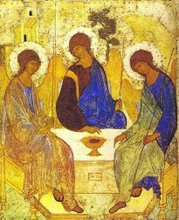
The Most Holy Trinity: a Union of Love
It is said that a people's values can be seen in the god they worship. For Christians, ``God is love'' (1 Jn 4:8). But a God who is love seems like a philosophical impossibility. How can one God, who is perfect, lacking nothing in himself and possessed of no dependence on creatures, be love when love necessitates a relation to another?
The resolution of this paradox God himself has revealed to us: God is perfect unity, but a unity of three Divine Persons-- Father, Son, and Holy Spirit-- who are each equally divine. The Father, Son, and Spirit exist from all eternity. None precedes the other in time, but each are related to the others by a relationship that orders them with respect to the others.
The ever-living, all-knowing, almighty God the Father exists from all eternity and is the source of all perfection created and uncreated. The self-conception and self-expression of the perfect Being is so complete that it is another person: God the Son, the image of the invisible Father, ``the only-begotten Son of God, begotten from the Father before all the ages, light from light, true God from true God, begotten not made, consubstantial with the Father, through whom all things came to be'' (Nicene-Constantipolitan Creed). The love between the Father and the Son is so perfect that it too is another person: the Holy Spirit ``the holy, the lordly and life-giving one, proceeding forth from the Father [and the Son], co-worshipped and co-glorified with Father and Son'' (ibid.).
But if the Holy Spirit is the love between the Father and the Son, how can God as a whole be called Love? Each person shares equally in the divine nature, so that each person shares equally in the perfections of the others. The only distinction between the persons of the Trinity is their mutual relations. None of the persons exists in respect to himself alone, but each exists relatively to the other two:
...the ``three persons'' who exist in God are the reality of word and love in their attachment to each other. They are not substances, personalities in the modern sense, but the relatedness whose pure actuality... does not impair unity of the highest being but fills it out. St Augustine once enshrined this idea in the following formula: ``He is not called Father with reference to himself but only in relation to the Son; seen by himself he is simply God.'' Here the decisive point comes beautifully to light. ``Father'' is purely a concept of relationship. Only in being-for the other is he Father; in his own being-in-himself he is simply God. Person is the pure relation of being related, nothing else. Relationship is not something extra added to the person, as it is with us; it only exists at all as relatedness.
....the First Person [the Father] does not beget the Son in the sense of the act of begetting coming on top of the finished Person; it is the act of begetting, of giving oneself, of streaming forth. It is identical with the act of giving. (Joseph Ratzinger Introduction to Christianity, pp. 131-132; cf. Augustine, Enarationes in Psalmos 68; De Trinitate VII, 1, 2.) Each of the persons of the Trinity lives completely for the others; each is a complete gift of self to the others. The complete self-giving not only constitutes the individual persons of the Trinity, but also their inseparable oneness.
Thus, for Christians the very basis of all reality is the loving communion of persons that is the Holy Trinity.
- Augustine Club@columbia.edu
The resolution of this paradox God himself has revealed to us: God is perfect unity, but a unity of three Divine Persons-- Father, Son, and Holy Spirit-- who are each equally divine. The Father, Son, and Spirit exist from all eternity. None precedes the other in time, but each are related to the others by a relationship that orders them with respect to the others.
The ever-living, all-knowing, almighty God the Father exists from all eternity and is the source of all perfection created and uncreated. The self-conception and self-expression of the perfect Being is so complete that it is another person: God the Son, the image of the invisible Father, ``the only-begotten Son of God, begotten from the Father before all the ages, light from light, true God from true God, begotten not made, consubstantial with the Father, through whom all things came to be'' (Nicene-Constantipolitan Creed). The love between the Father and the Son is so perfect that it too is another person: the Holy Spirit ``the holy, the lordly and life-giving one, proceeding forth from the Father [and the Son], co-worshipped and co-glorified with Father and Son'' (ibid.).
But if the Holy Spirit is the love between the Father and the Son, how can God as a whole be called Love? Each person shares equally in the divine nature, so that each person shares equally in the perfections of the others. The only distinction between the persons of the Trinity is their mutual relations. None of the persons exists in respect to himself alone, but each exists relatively to the other two:
...the ``three persons'' who exist in God are the reality of word and love in their attachment to each other. They are not substances, personalities in the modern sense, but the relatedness whose pure actuality... does not impair unity of the highest being but fills it out. St Augustine once enshrined this idea in the following formula: ``He is not called Father with reference to himself but only in relation to the Son; seen by himself he is simply God.'' Here the decisive point comes beautifully to light. ``Father'' is purely a concept of relationship. Only in being-for the other is he Father; in his own being-in-himself he is simply God. Person is the pure relation of being related, nothing else. Relationship is not something extra added to the person, as it is with us; it only exists at all as relatedness.
....the First Person [the Father] does not beget the Son in the sense of the act of begetting coming on top of the finished Person; it is the act of begetting, of giving oneself, of streaming forth. It is identical with the act of giving. (Joseph Ratzinger Introduction to Christianity, pp. 131-132; cf. Augustine, Enarationes in Psalmos 68; De Trinitate VII, 1, 2.) Each of the persons of the Trinity lives completely for the others; each is a complete gift of self to the others. The complete self-giving not only constitutes the individual persons of the Trinity, but also their inseparable oneness.
Thus, for Christians the very basis of all reality is the loving communion of persons that is the Holy Trinity.
- Augustine Club@columbia.edu
Subscribe to:
Posts (Atom)